
Sustainable packaging connects disaster prevention with everyday life
Celebrating its fifth anniversary, GOOD NATURE STATION has been holding various events to connect with society, the environment, and the local community under the theme of "5 YEARS 5 GOODS."
In January 2025, which marks 30 years since the Great Hanshin-Awaji Earthquake, we will hold special exhibitions and lectures under the theme of "GOOD for Social," linking everyday life with disaster prevention.
We don't know when or where a disaster will occur. I'm sure there are many people who feel anxious but don't know what to do. If you take precautions in your daily life, you will be able to act calmly when an emergency occurs.
The aim was to provide practical suggestions for protecting yourself and your loved ones. With the cooperation of experts and companies, the event introduced ideas for things you can easily do in your daily life and habits you can make a part of, such as "What should you take with you?", "How should you store food?", and "Can furoshiki be useful in disaster prevention?", creating a connection between disaster prevention and everyday life.
Reassess what you should have
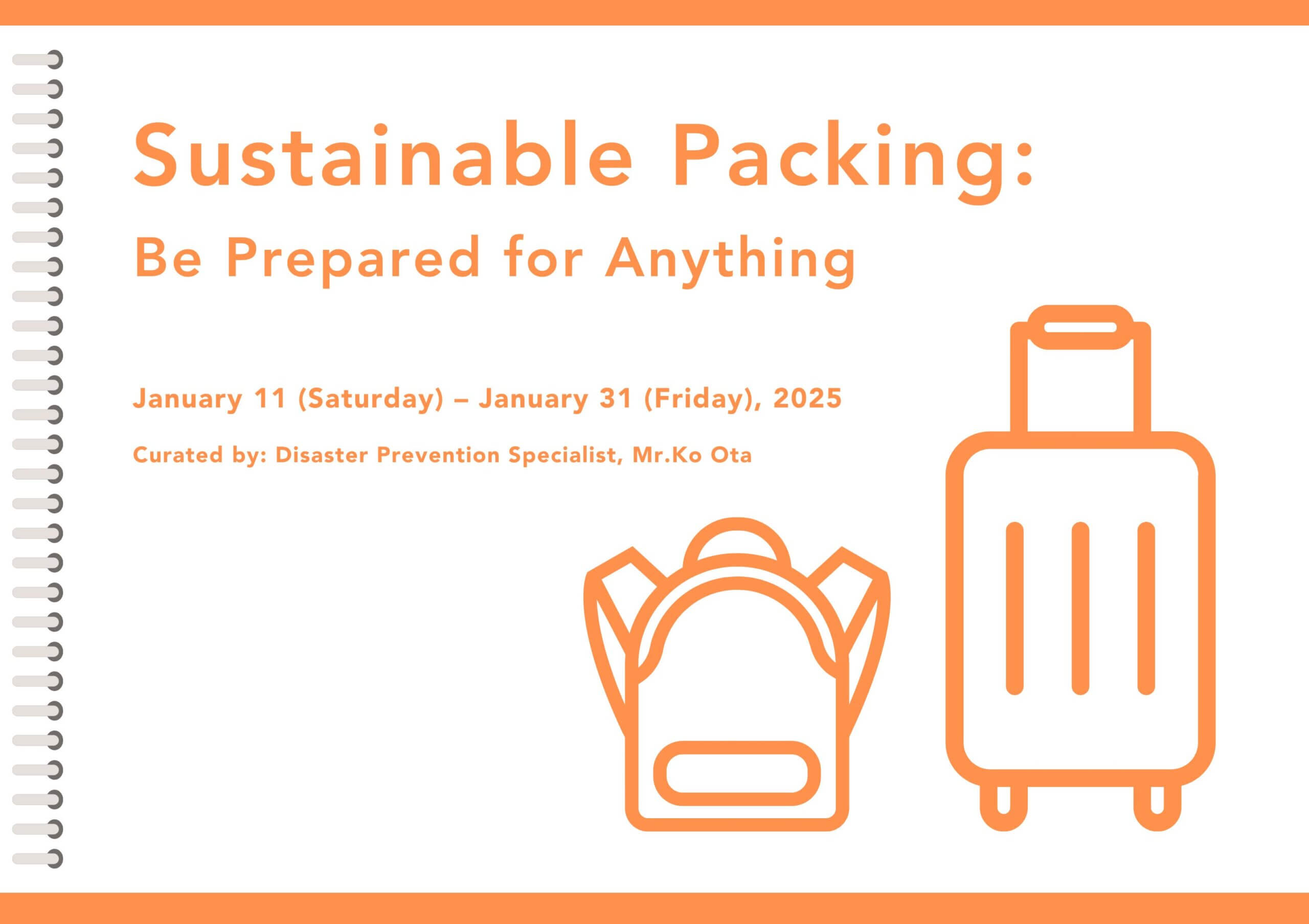
Marking the 30th anniversary of the Great Hanshin-Awaji Earthquake, a special exhibition entitled "Sustainable Packing" was held in the gallery on the 4th floor from January 11th to 31st, providing an opportunity to think once again about disaster preparedness.
Packing is something that travel preparation and disaster prevention have in common. Even if you prepare disaster prevention goods, if you don't use them on a daily basis, you may not know how to use them or the expiration date may have passed... If you can use the things you use in your daily life for disaster prevention, you won't panic in an emergency and you will feel more secure than anything else. We displayed how to hold and arrange disaster prevention items in a visually easy-to-understand way.
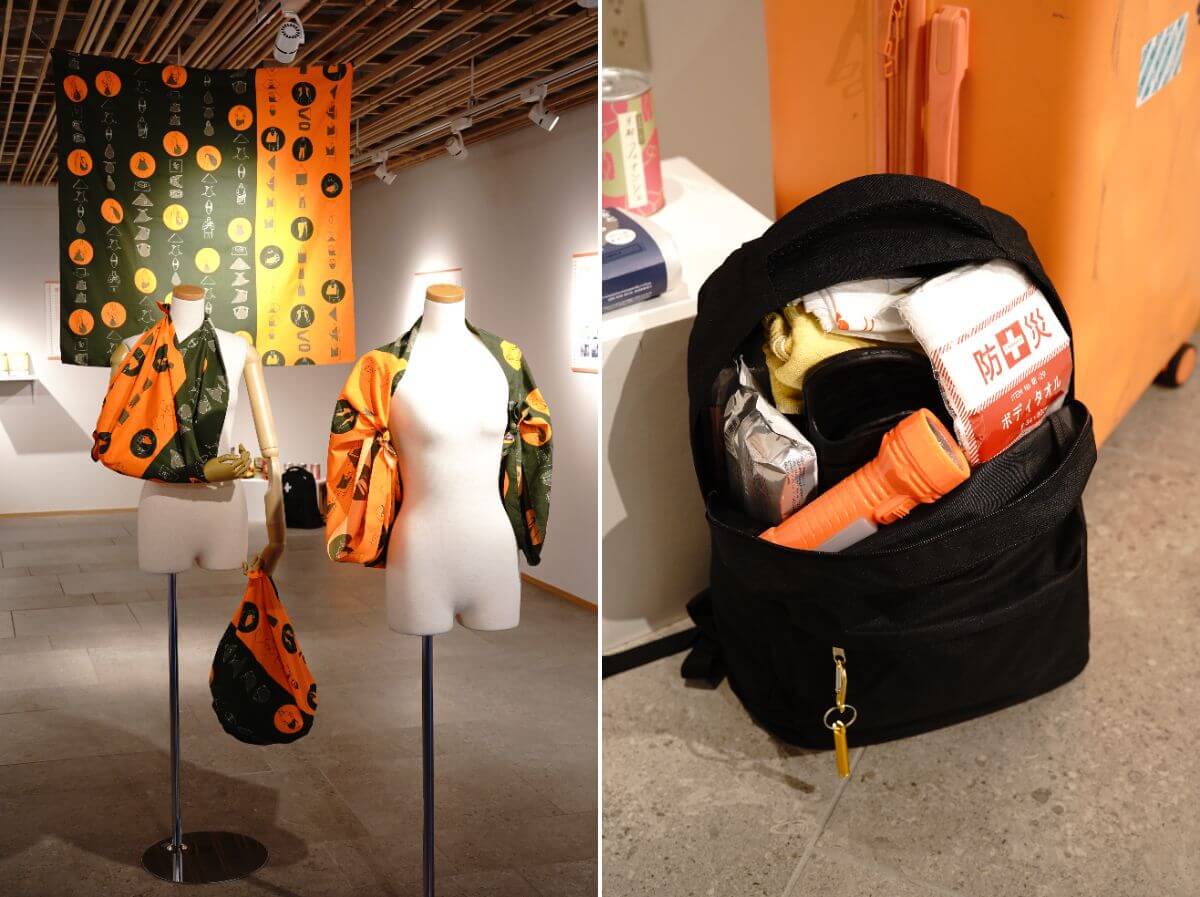
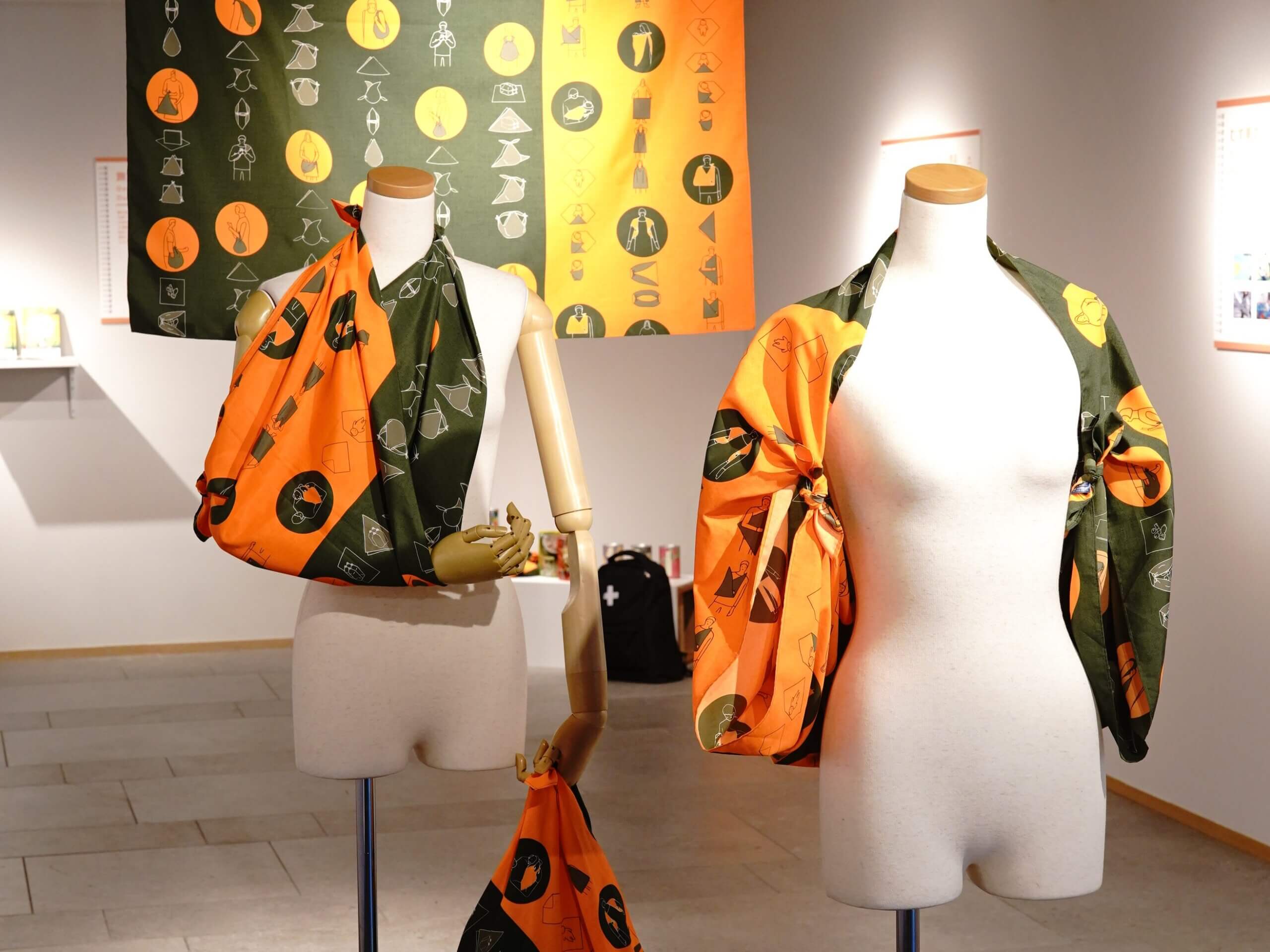
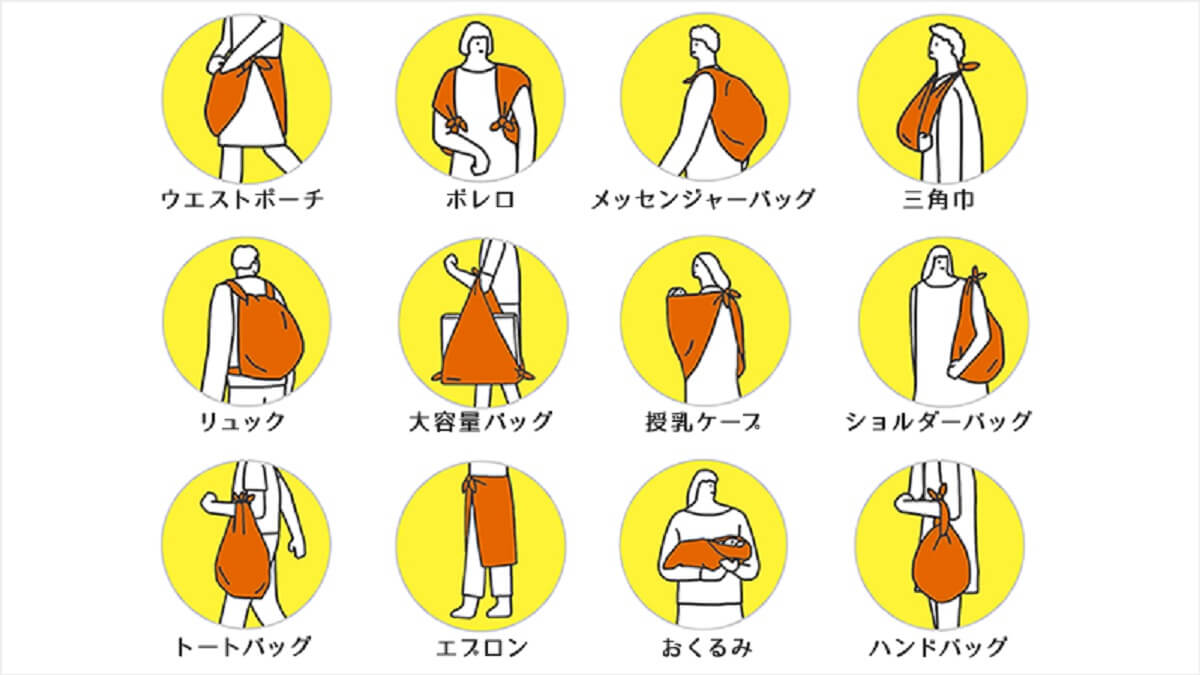
We will introduce how to use furoshiki in emergencies with examples. Disaster prevention furoshiki from "Musubi," a furoshiki brand originating in Kyoto, is made of water-repellent fabric and has 12 different ways of using it printed on it. It can be tied into a bag, worn as a bolero, and is durable enough to carry four 2L plastic bottles of water. It is also water-repellent coated, so it can be used to carry water, making it extremely convenient. If you fold it up small and carry it with you, you can use it safely when you're out and about. Knowing this makes a difference.
In addition, we also introduced recommended rolling stock and a guide map for those unable to return home in the event of a disaster in Kyoto City. This content was useful for both locals and tourists from overseas, and many people took notice.
If you take stock of what you really need, select and continue to use only the things you cherish, they will support you in your daily life and in times of emergency, and they will be sustainable.
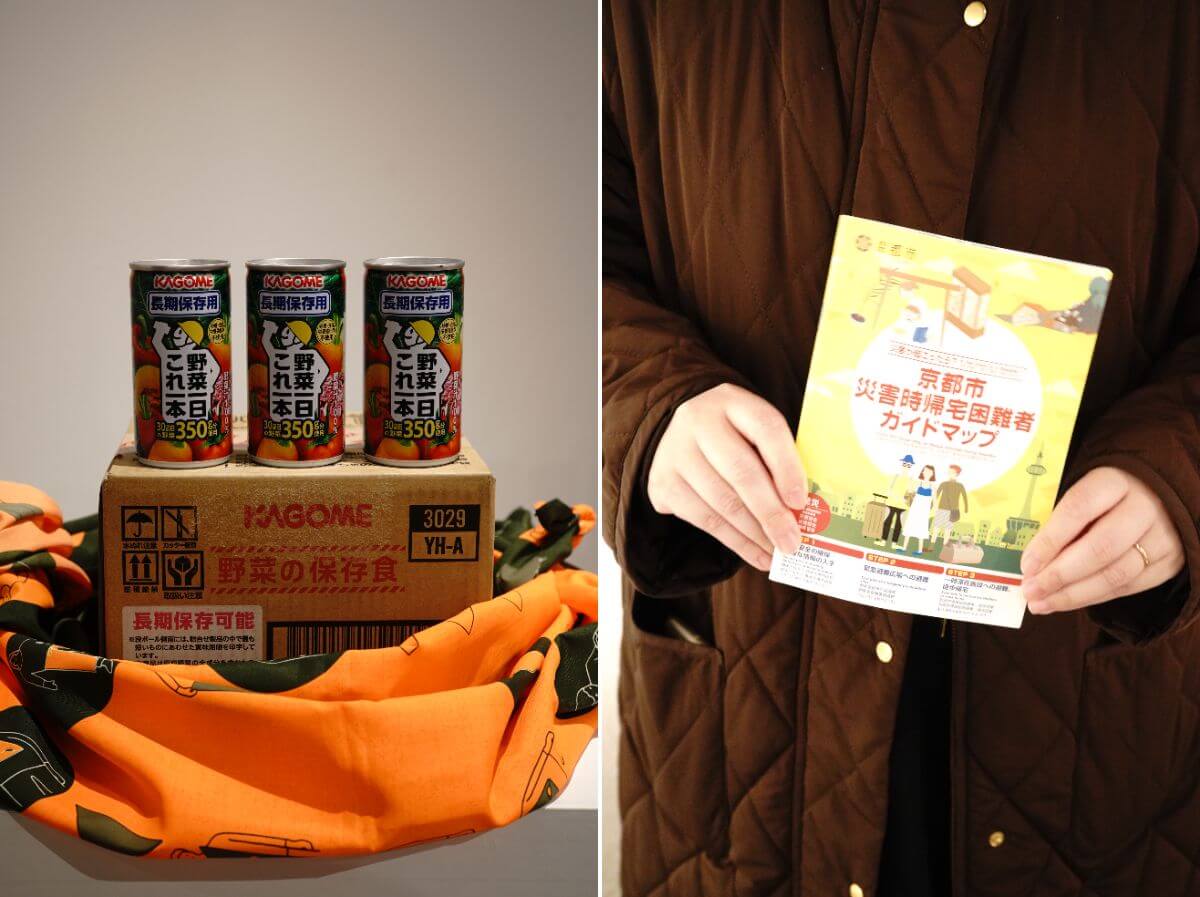
Left: Kagome's "Preserved Vegetable Set," which allows you to easily consume vegetables, won the first Japan Disaster Food Award. It includes a long-lasting vegetable juice "One Bottle of Vegetable a Day" and an assortment of soups full of vegetables. Right: "Kyoto City Disaster Prevention Guide Map for People Unable to Return Home" lists emergency evacuation areas, temporary accommodation facilities, toilets, etc. It is written in Japanese, English, Chinese, and Korean to support travelers.
We asked an expert for tips on incorporating it into your daily life
On January 17th, "Disaster Prevention and Volunteer Day," we invited three experts who work hard to connect disaster prevention with daily life to give free lectures on the theme of "From Everyday Life to Disaster Prevention."
The first speaker was disaster prevention specialist Oota Oki. He explained disaster prevention priorities and the effectiveness of rolling stock as "the right preparations and their basis." Oota experienced the Great Hanshin-Awaji Earthquake in Nishinomiya City, Hyogo Prefecture, and after obtaining a disaster prevention qualification, he is now based in Kyoto, where he works to raise disaster prevention awareness in various settings, such as elementary schools and local organizations. He also supervised this gallery exhibition.
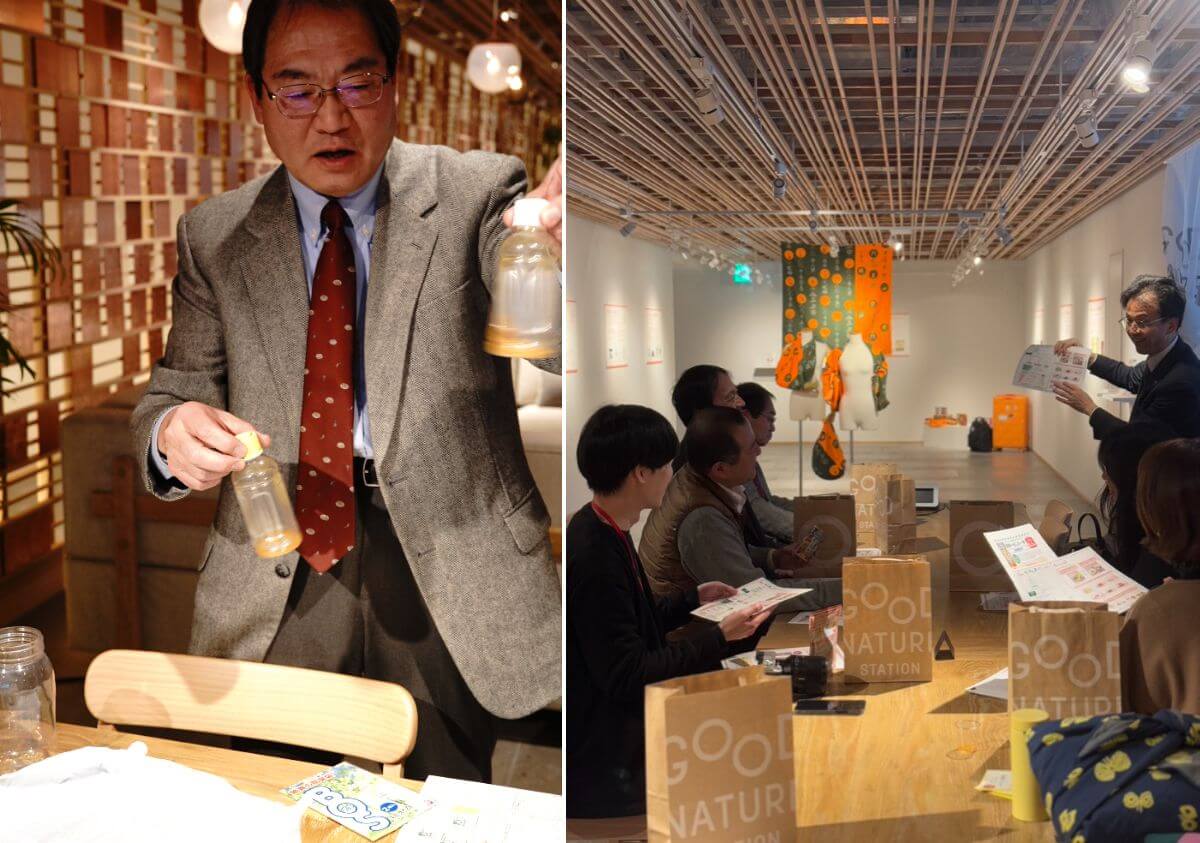
Left: Ota Oki, a disaster prevention specialist. Right: Kagome Co., Ltd.'s Chikazawa Yoshitoshi gives a lecture on dietary habits during evacuation.
"Fortunately, Kyoto is protected,' but with continuing climate change, no place can be said to be safe. First of all, I want people to accept the reality of the situation. I would like to speak to the children and younger generations who will live in the future," says Ota.
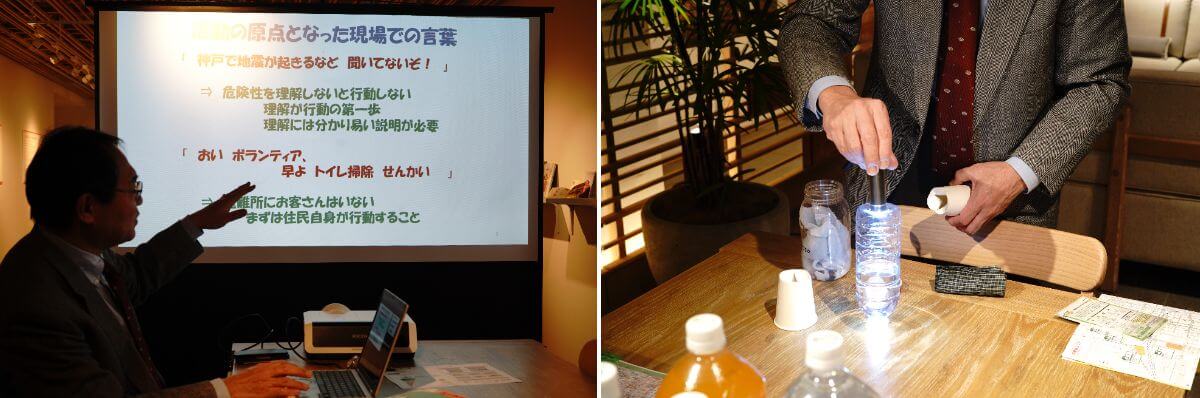
Left: Mr. Ota talks while quoting a newspaper article that highlighted the low level of awareness of earthquake danger among Kyoto residents. Right: Using bottled water and a flashlight for lighting.
Ota, who has been to disaster sites, gave us a lot of heartfelt advice. His words, "There are no customers at evacuation centers. It is up to the residents themselves to act," really struck a chord with us. If we don't take action ourselves, nothing will move forward. That's why it's important to be aware and prepared in your daily life. He gave us useful information in the event of a disaster, including demonstrations of how to illuminate water in a plastic bottle with a flashlight and how to use pet sheets in an emergency.
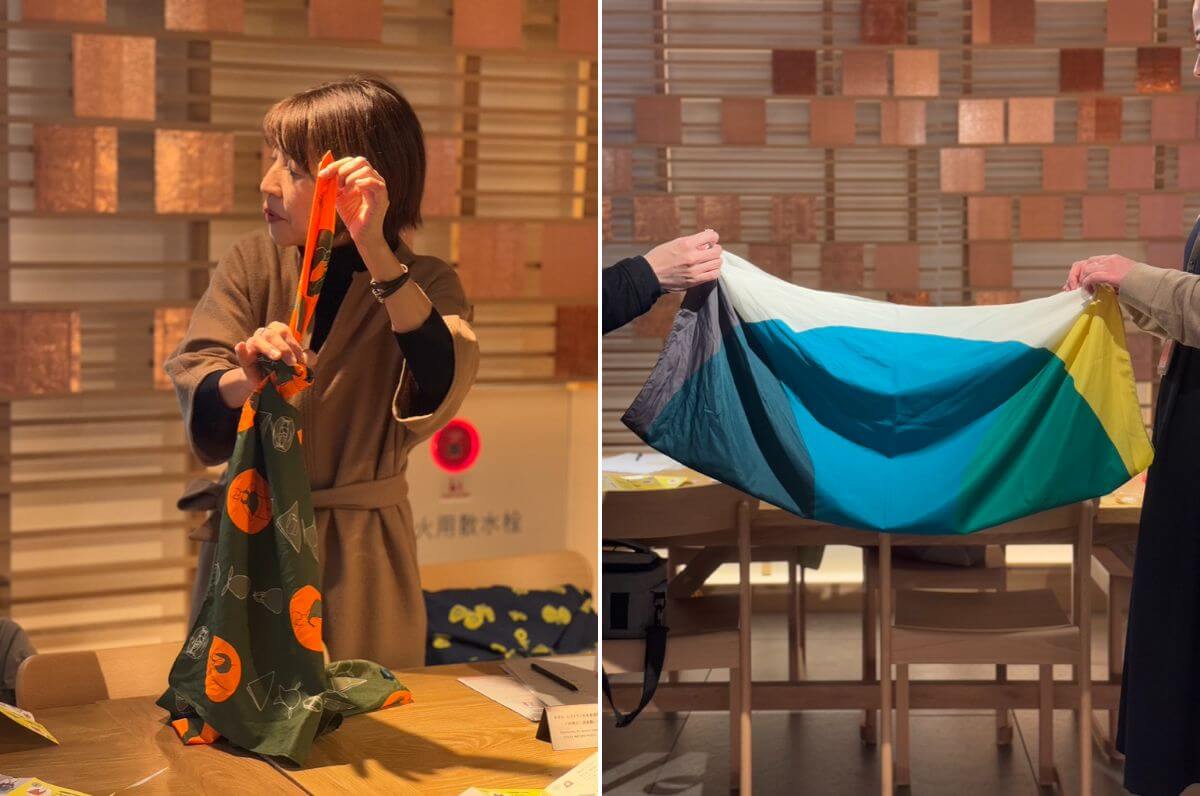
Etsuko Yamada of Musubi demonstrates how to use furoshiki cloth.
Etsuko Yamada, from Musubi, a furoshiki brand produced by Yamada Seni Co., Ltd., gave a lecture on how to use furoshiki in everyday life and in times of disaster. She demonstrated the various ways to use furoshiki, which are also introduced in the gallery exhibition, by spreading, tying, and wrapping them right in front of the participants. The participants were impressed by how the furoshiki changed shape and its uses expanded. It is a truly sustainable item that can be used daily and is also useful in disaster prevention.
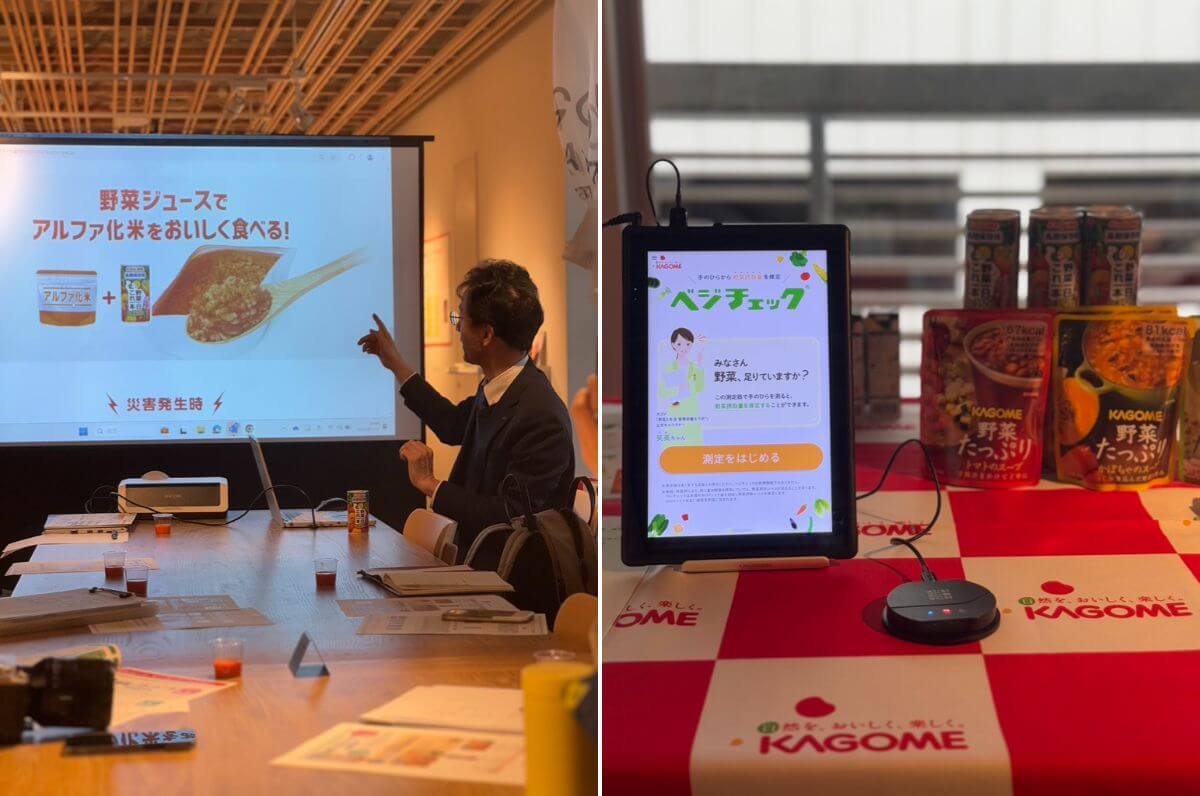
Left: Slides explaining how to use vegetable juice. Right: Check your vegetable intake with "Kagome Veggie Check®️."
The last guest was Yoshitoshi Chikazawa from Kagome Co., Ltd. He told us how to use preserved foods and vegetable juice to stay healthy during disasters. Mr. Chikazawa experienced the Great East Japan Earthquake in Sendai, Miyagi Prefecture.
"When you're living in a disaster zone, you're bound to have a shortage of vegetables. I recommend keeping a rolling stock of preserved vegetable foods and vegetable juices on a daily basis, enjoying them at your regular dinner table, and buying more when you run out," says Chikazawa.
It is important to choose foods that are not only nutritious and good for your body, but also delicious. Delicious foods enrich your daily life and also help relieve the stress of life in a disaster area.
At the venue, a free measurement was also conducted using the "Kagome Vege Check®️" device that can check the estimated vegetable intake. It was very easy to do, just press the palm of your hand against the button. It made me realize that I should reconsider my eating habits.
All three speakers shared stories that were relevant to their daily lives, and the attendees listened intently. Through this exhibition, I realized that holding regular events on the theme of disaster prevention leads to raising awareness. We will continue to create opportunities to connect everyday life with disaster prevention.
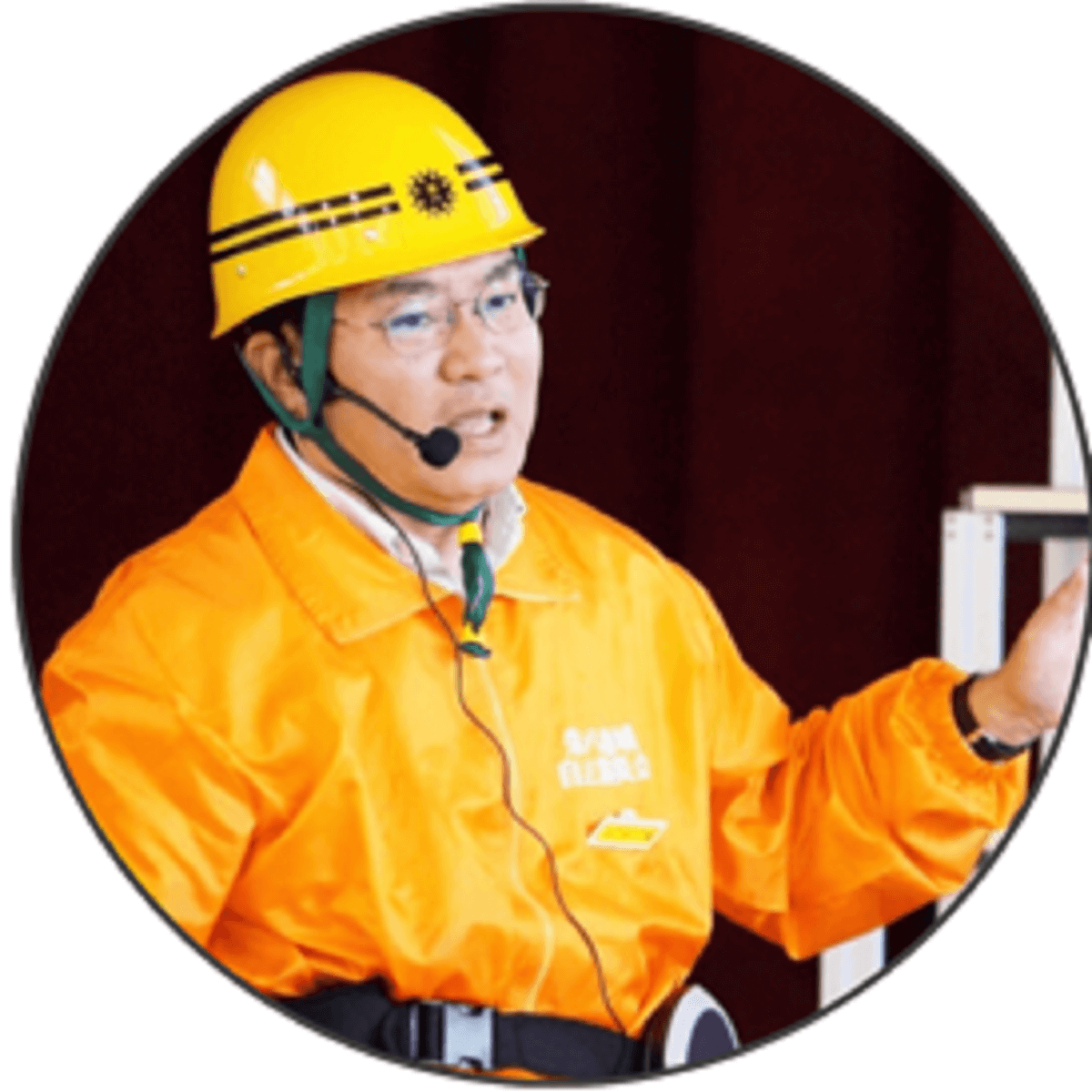 |
Disaster Prevention Officer Ota Oki The Disaster Prevention Specialist System was started after the Great Hanshin-Awaji Earthquake to train people with the right knowledge and appropriate judgment in the event of unpredictable damage. It supports victims of disasters and raises awareness of disaster prevention. Ota was certified as a disaster prevention specialist after his experience as a victim of the Great Hanshin-Awaji Earthquake, and is based in Kyoto. |
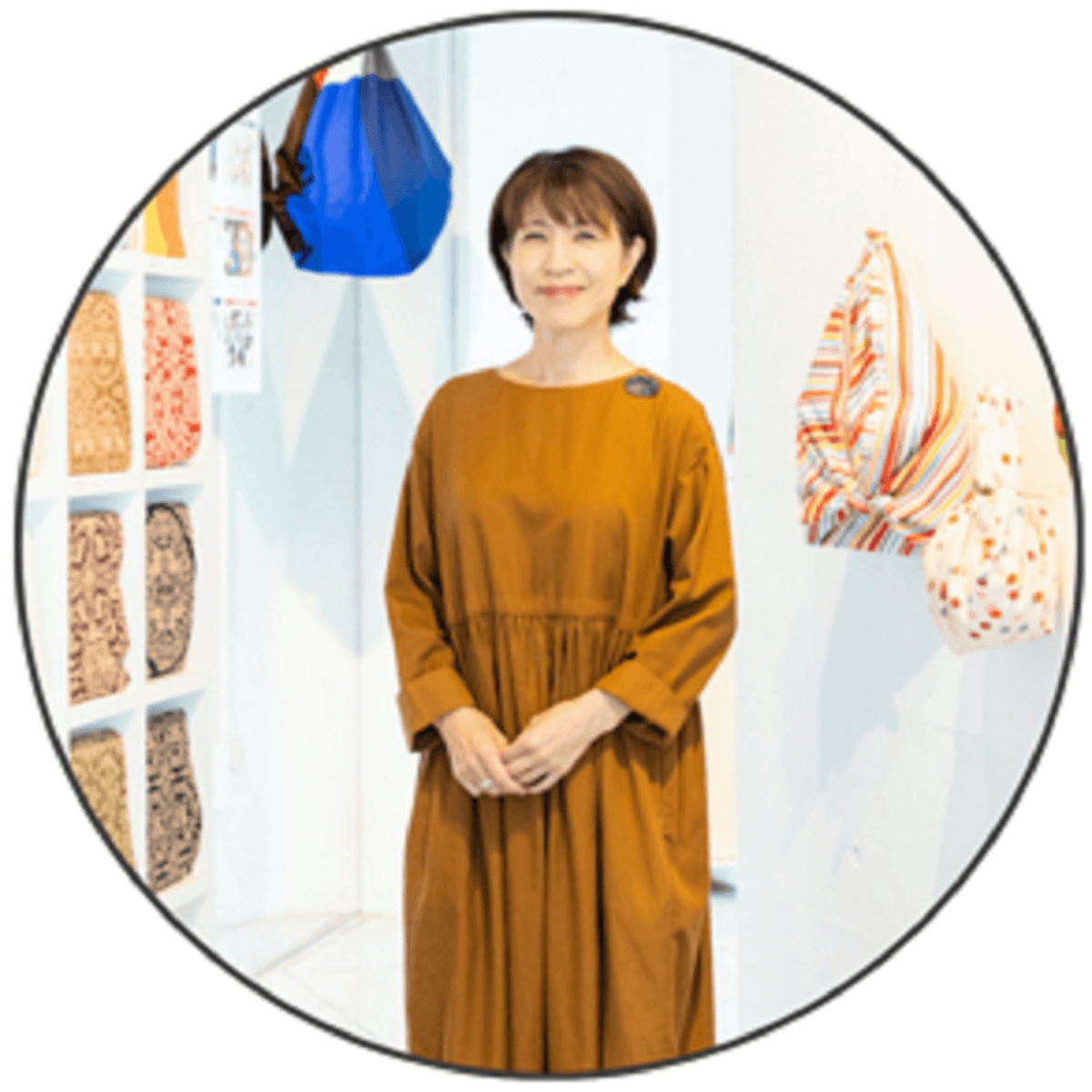 |
Etsuko Yamada, "Musubi" of Yamada Textile Co., Ltd. https://www.kyoto-musubi.com She is in charge of public relations for Yamada Sen-i Co., Ltd., a specialist furoshiki manufacturer, and the original furoshiki brand "Musubi." She also holds Shop and lectures to spread knowledge about how to use furoshiki, spreading its appeal to the world. |
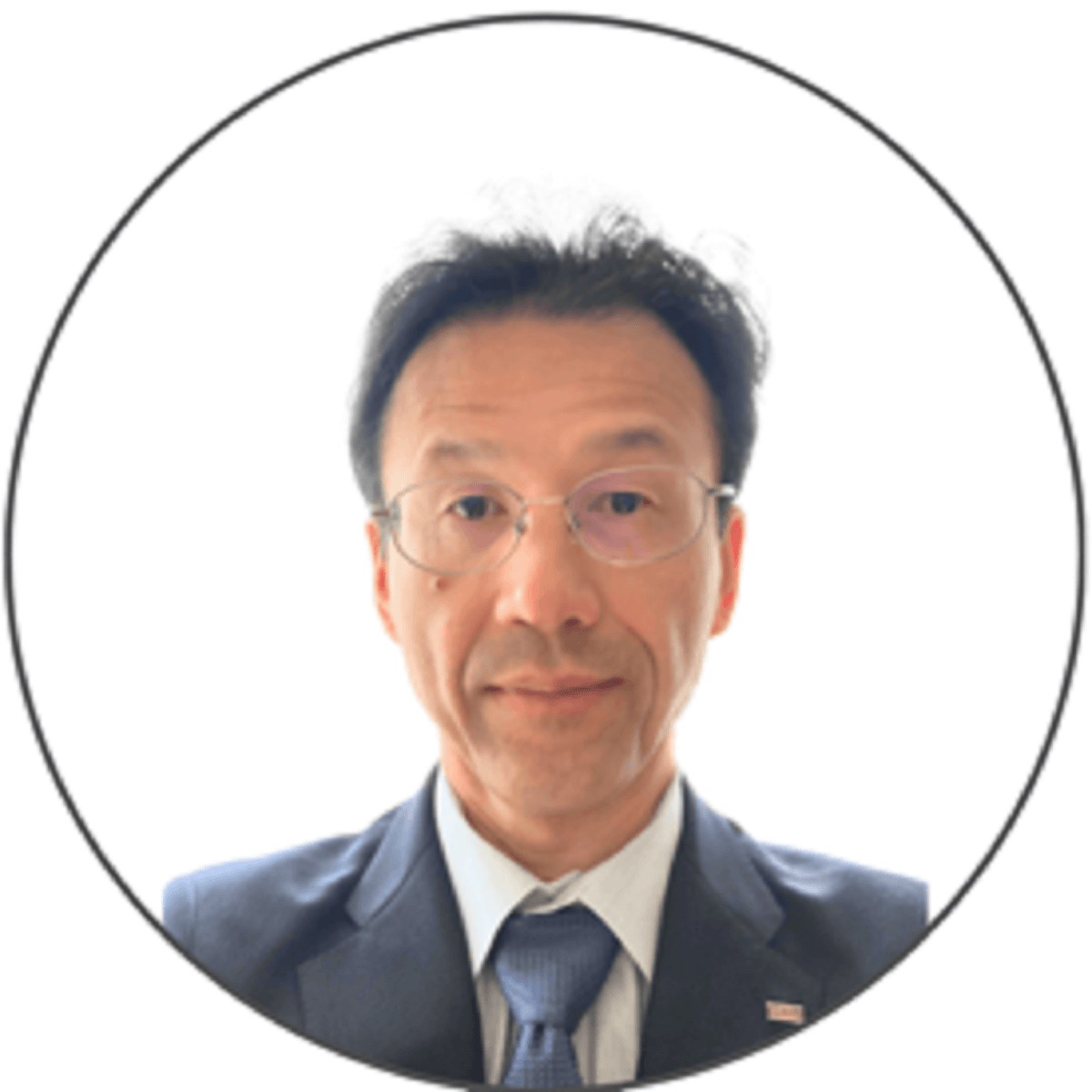 |
Kagome Co., Ltd. Yoshitoshi Chikazawa https://www.kagome.co.jp Kagome's "Vegetable Preservation Set" is a recommended emergency food that allows you to easily consume vegetables and is useful in times of disaster, and won the 1st Japan Disaster Food Award in 2021. This time, we will be sharing advice on disasters centered on food, such as the importance of consuming vegetables and rolling stocks. |